 MUXA Design Studio
A single source of truth for an investment company's knowledge: past interactions with companies, investment history with context, investment data and who the experts are.
Mubadala is a sovereign wealth fund owned by the Government of Abu Dhabi. They wanted one place that brings together information from their CRMs, team collaboration tools and databases.
The knowledge management tool centralizes what the organization knows about its investments, so teams stop duplicating effort: no second approach to a company someone has already contacted, and no repeated research and analysis of the same investment data. That saves time and money, and protects the integrity of the brand.
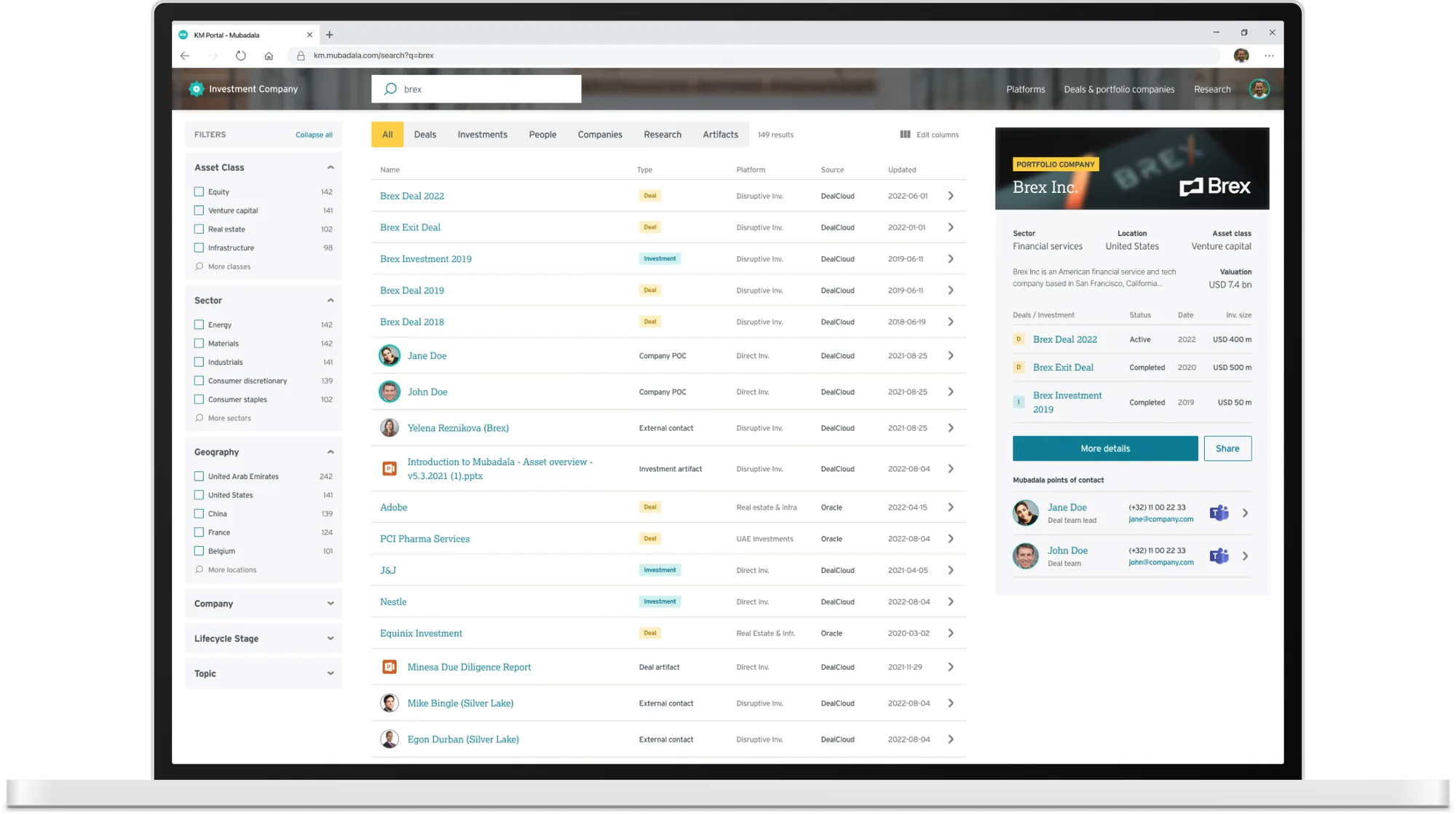
Employees needed access to past interactions with companies, investment history with its context, and a way to find the right expert.
Platform CEOs need to know all previous contact with a company, and what came of it, to avoid contacting them twice and to protect the Mubadala brand.
Platform CEOs need the context behind buy and sell decisions, past and current, so they can learn from mistakes and keep that knowledge when a deal is terminated or deprioritized.
Platform strategists need an easier way to find market data so they can propose better deals. It was fragmented: they checked each source one by one instead of one consolidated list.
We conducted extensive research and held design review sessions with users and stakeholders to understand the requirements. Deliverables included user flows, wireframes, visual designs and research content.

Amir is constantly looking for ways to share knowledge to help his teams make better decisions. He wants to keep making informed investments for Mubadala, but at a bigger scale. He gets frustrated when he finds out about information that would have helped him, after the fact.
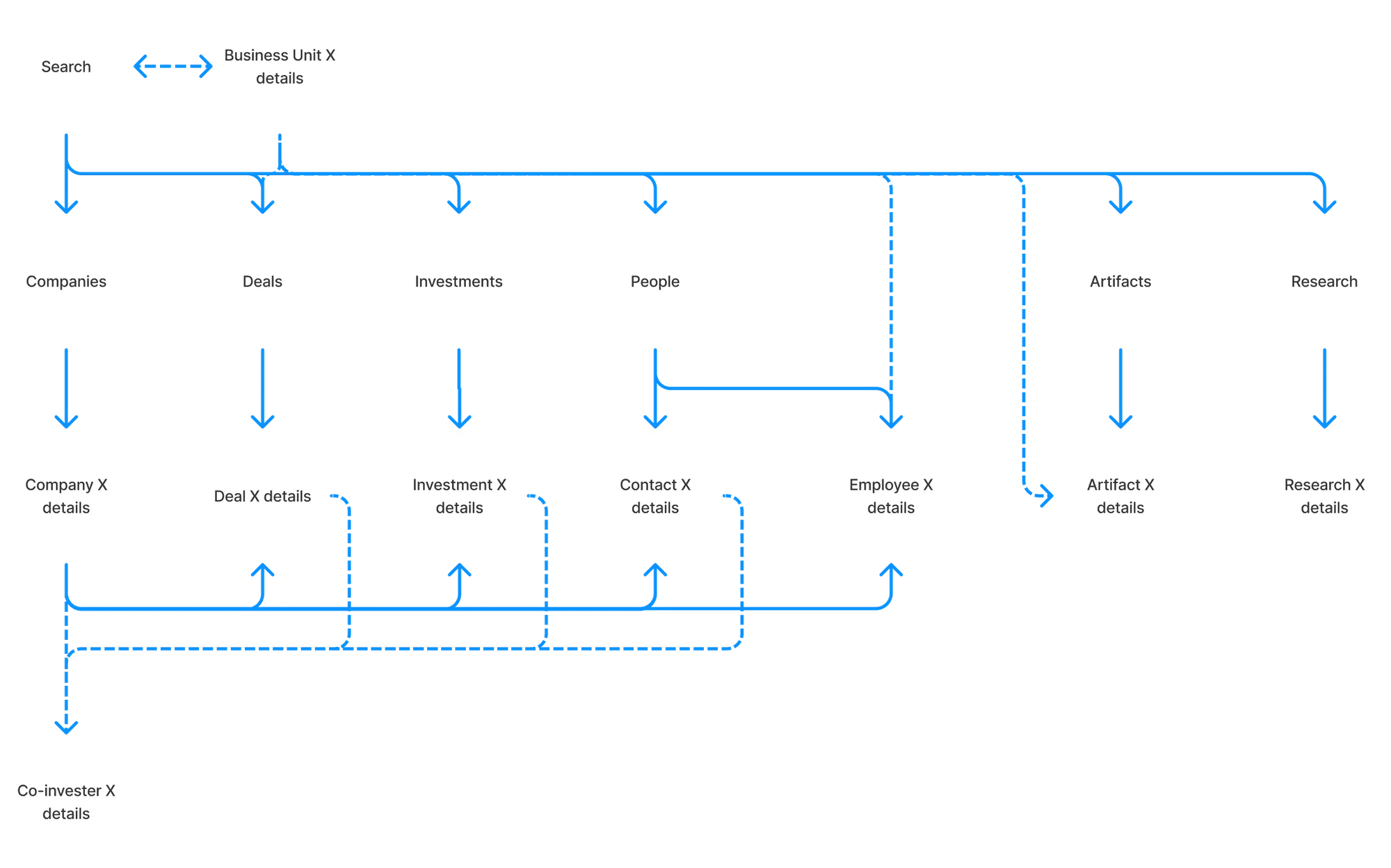
Search sits at the center. From there, people reach companies, deals, investments, people, artifacts and research, and each has its own detail page that links back to the others.
We wireframe to make sure we're meeting the user and business needs before investing time in perfecting the styles. It allows for quicker iterations.
After usability testing and refinements, we designed the final mockups, used for company collateral and for development.
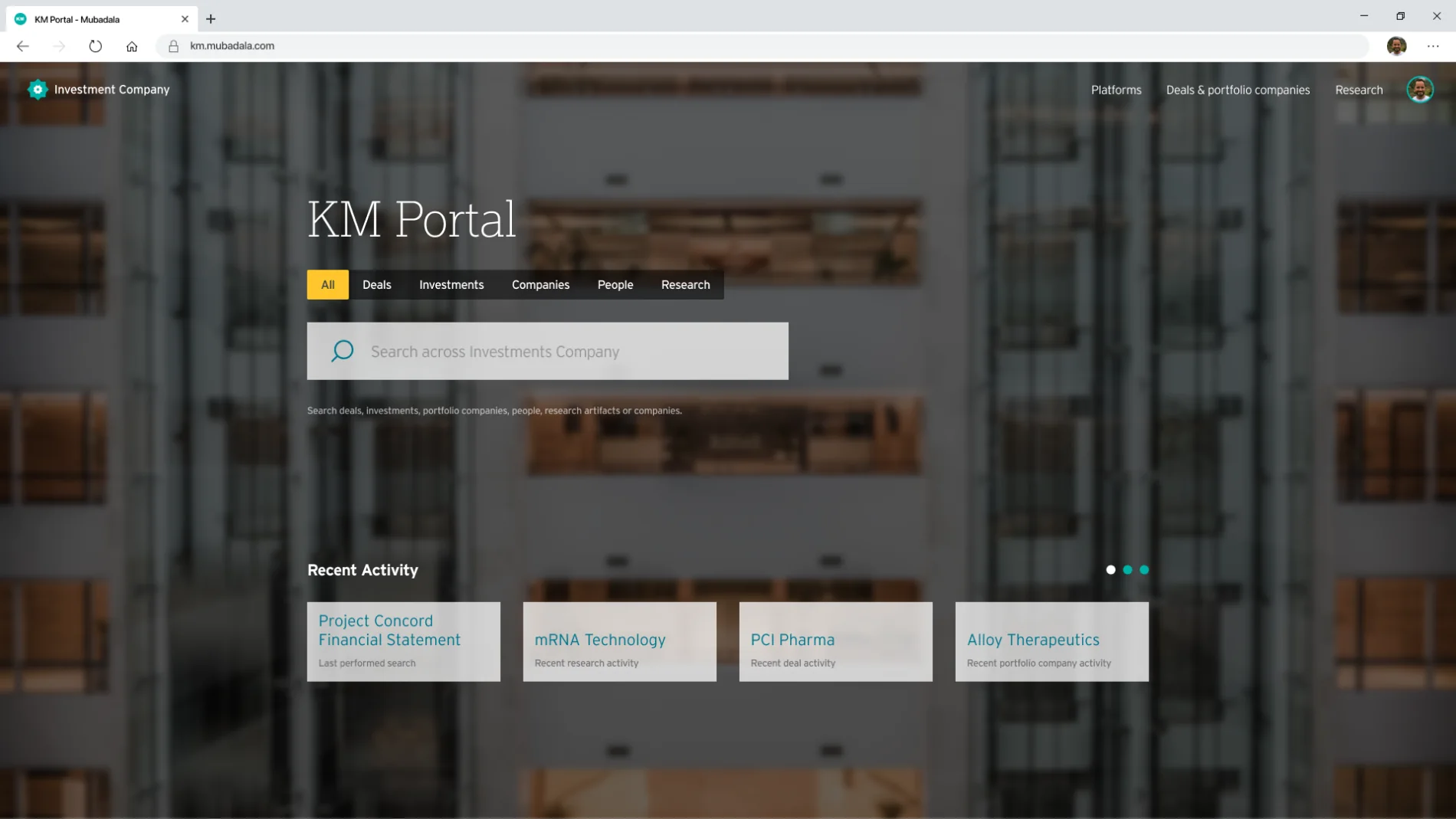
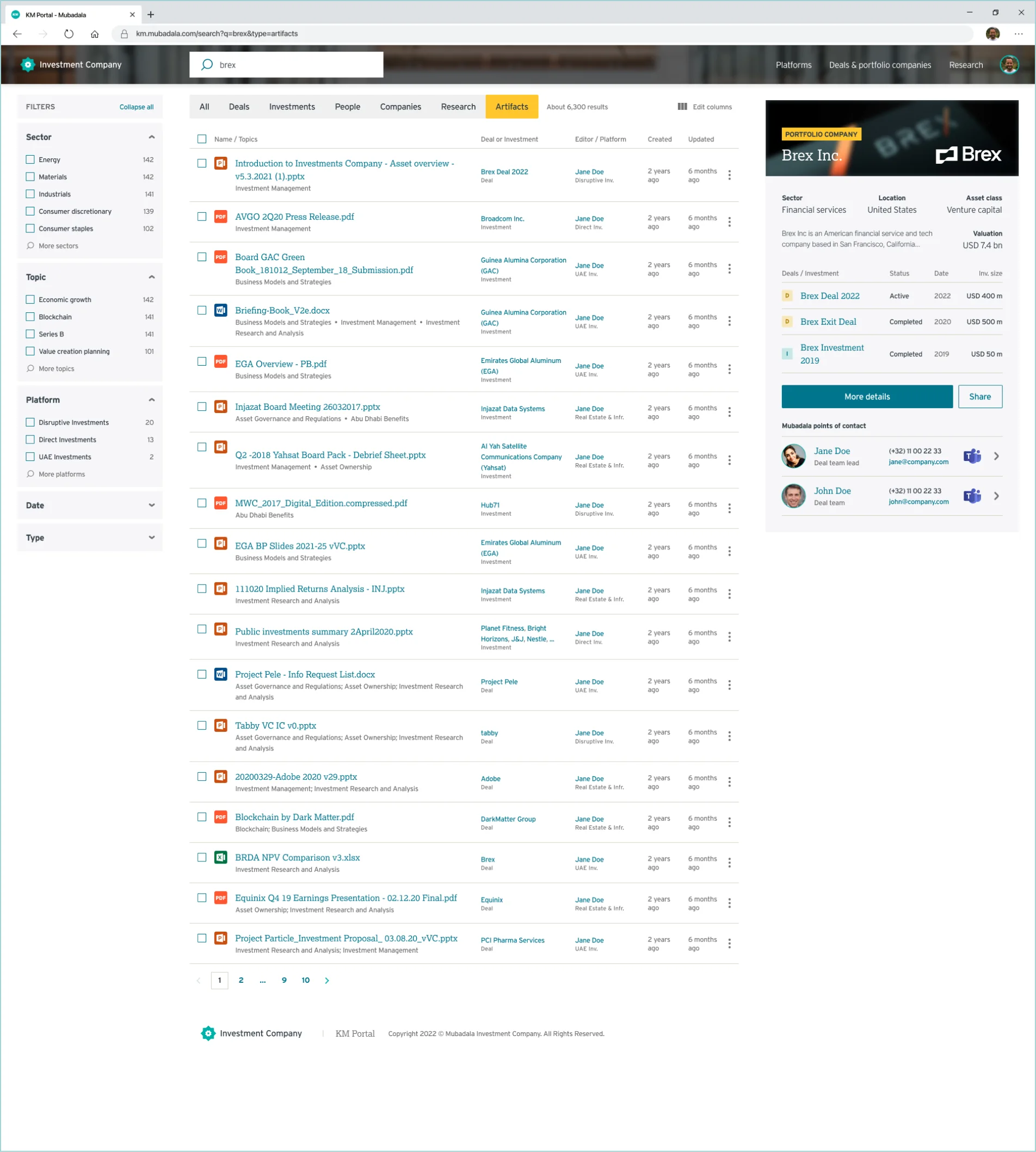
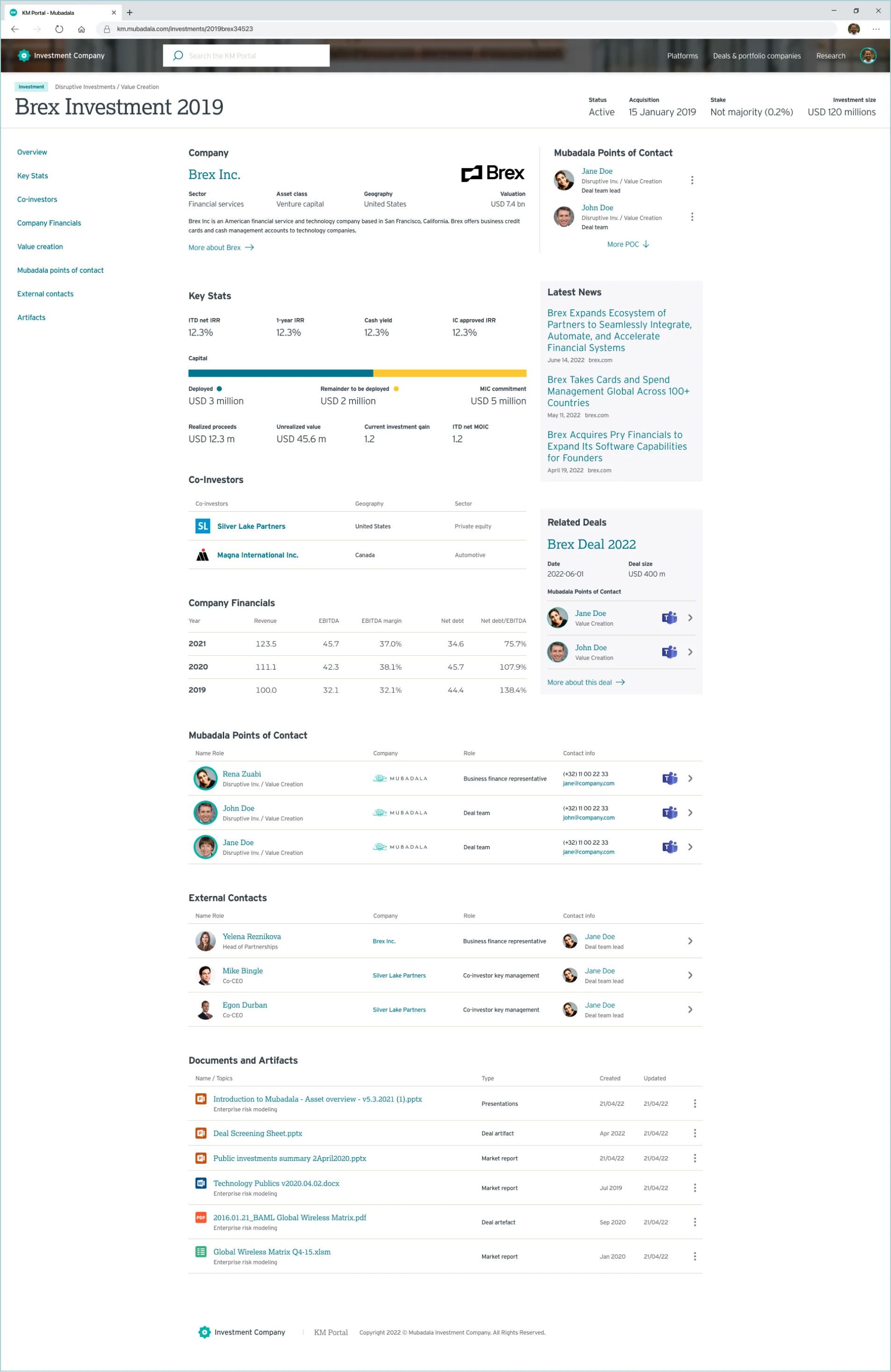
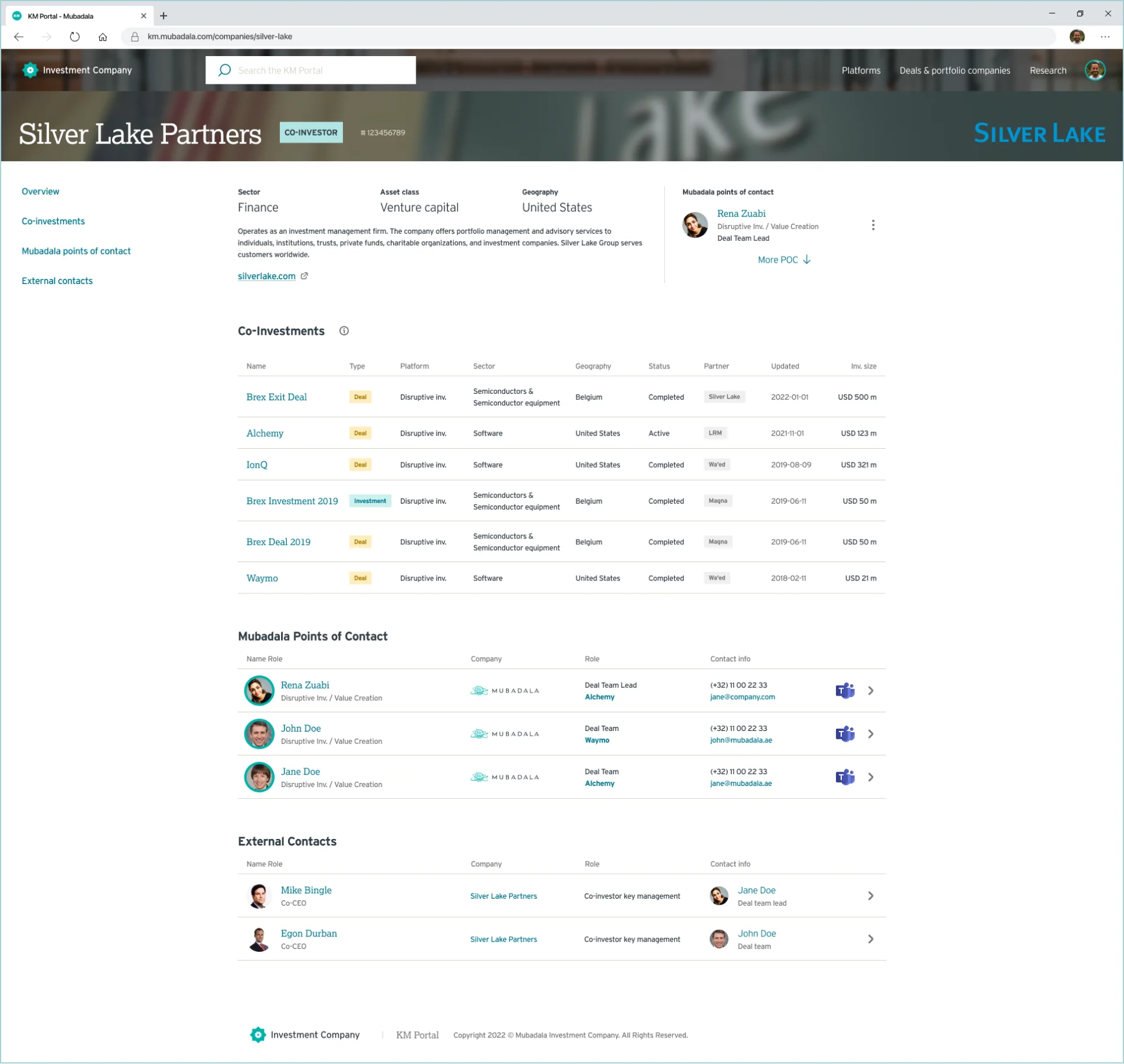
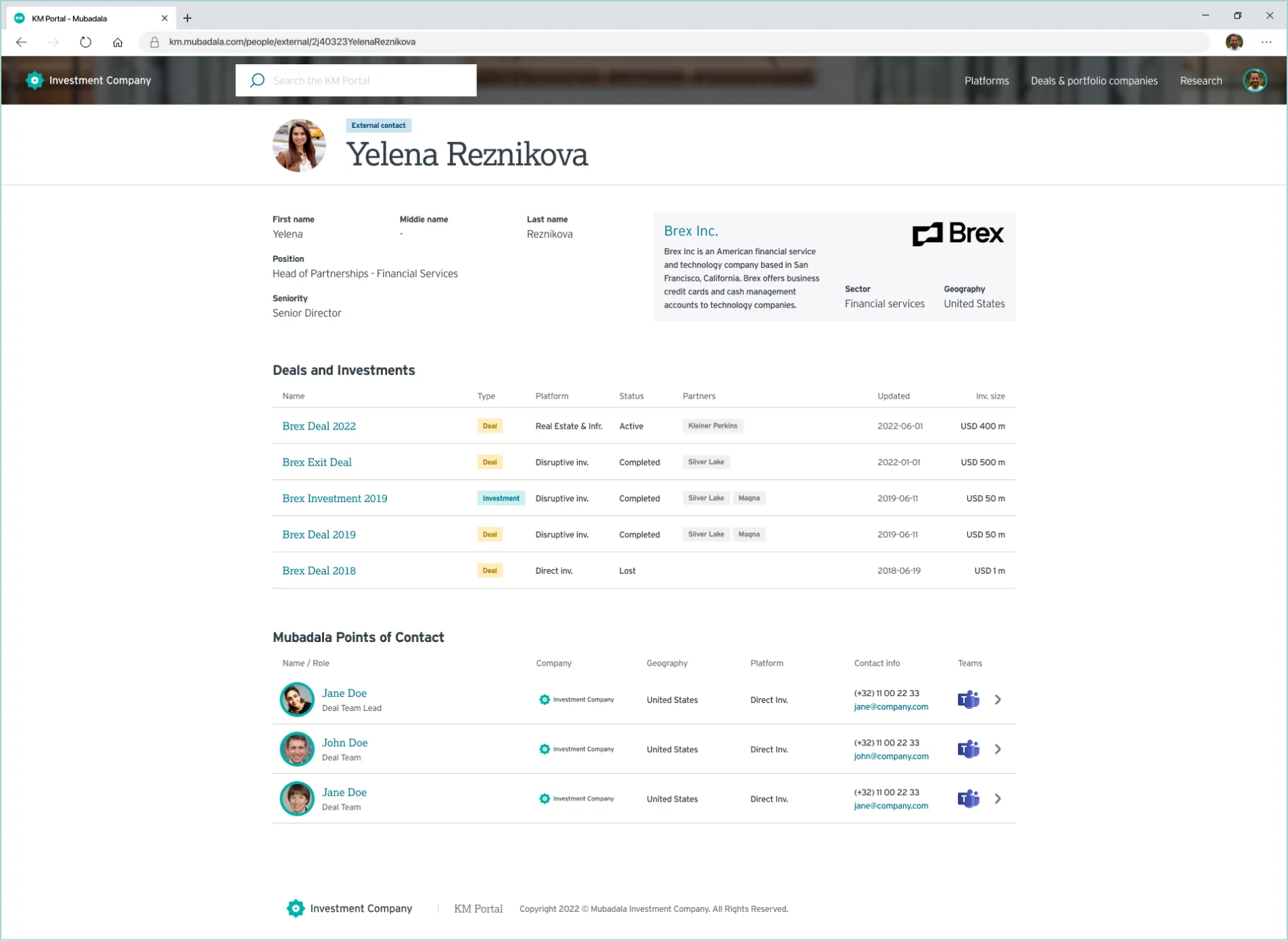
Employees gained access to critical information, which improved decision-making. Better collaboration and data integration cut the duplication of effort and made teams more productive.
More selected work across enterprise AI, complex internal systems, and consumer fintech.
↑ Back to top